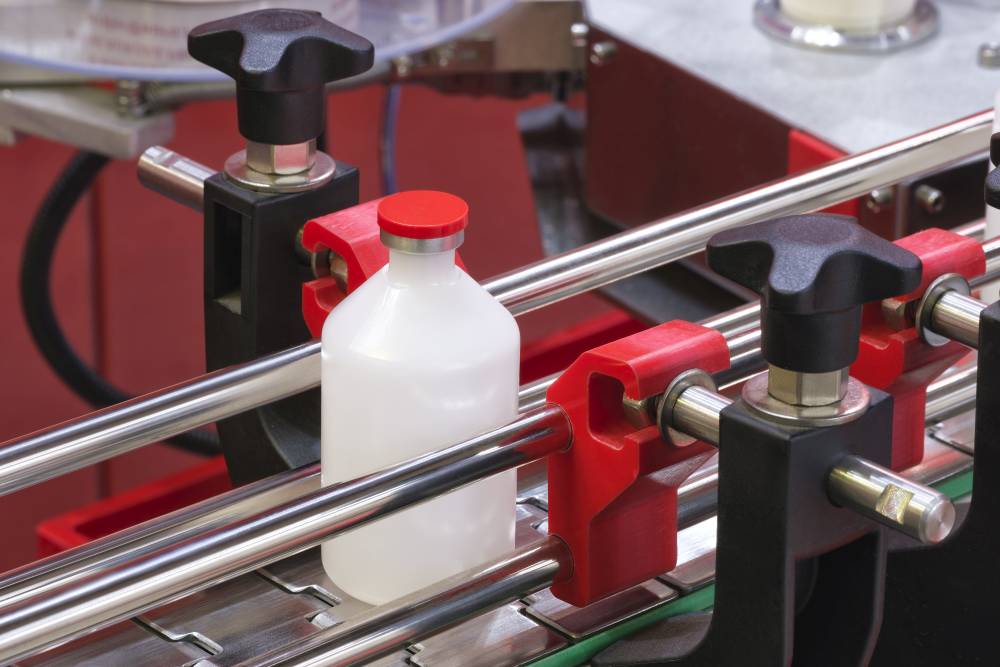
A pail filling machine solves a problem that every manufacturer of liquid products eventually confronts: how to fill containers consistently, at speed, with a level of accuracy that reduces waste and satisfies customers.
What Pail Filling Machines Are Designed to Handle
Pails are ubiquitous in industrial and commercial packaging. Paint, adhesive, lubricant, chemical concentrate, food-grade fat, construction compound, and agricultural product all move through the supply chain in pails of varying sizes, typically from one to twenty-five litres. Each of these products has a different viscosity, different fill temperature requirements, and different tolerances for fill weight variation.
A pail-filling machine is engineered around the specific properties of the product it will handle. A machine designed for a thin, low-viscosity liquid, such as water-based paint, operates on different principles from one handling a thick, high-viscosity product such as grease or silicone sealant. The filling mechanism, the pump type, the valve design, and the accuracy system are all specified for the product’s physical behaviour.
Fill-by-Weight vs Fill-by-Volume
The two dominant approaches to pail filling are weight-based and volume-based, each with distinct advantages:
- Weight-based filling: uses load cells beneath the pail to measure the fill weight in real time, stopping the fill when the target weight is reached. This approach is accurate regardless of product density variation and is preferred for products sold by weight, or for applications where strict net content compliance is required.
- Volume-based filling: uses a metered dispensing system that delivers a fixed volume per fill cycle. This is faster and mechanically simpler but less accurate for products whose density varies with temperature or batch composition.
For products where weight accuracy matters commercially or for regulatory compliance, pail-filling machine systems with integrated weighing provide the most reliable solution.
Semi-Automatic vs Fully Automatic Filling Lines
The choice between semi-automatic and fully automatic systems depends on production volume, labour costs, and the level of consistency required:
Semi-automatic pail fillers require an operator to position the pail under the fill head, initiate the fill cycle, and remove the filled pail for lidding and palletising. These systems suit lower-volume operations or businesses where the capital cost of a fully automated line is not justified by current throughput.
Fully automatic lines integrate pail conveying, filling, lidding, and palletising into a continuous process that requires minimal operator intervention. These systems produce higher throughput, more consistent results, and lower per-unit labour costs, but require greater capital investment and more sophisticated maintenance.
Accuracy and Its Downstream Value
In liquid packaging, accuracy is not simply a quality metric – it has direct commercial consequences. A filling machine that consistently overfills gives away product. One that underfills creates regulatory exposure and customer complaints. The value of a pail filling machine that holds fill accuracy within a tight tolerance compounds across thousands of daily fills.
For a product with a high unit value, such as specialty adhesive or food-grade lubricant, even a half-percentage-point improvement in fill accuracy at high production volumes translates into measurable annual savings.
“Precision is not perfectionism. Precision is respect for the value of what you are producing.” – Lee Kuan Yew.
This applies directly to filling line accuracy. Consistent, precise fills reflect the quality of the manufacturer’s operation.
Integration with Pail Denesting and Palletising
A pail filler rarely operates in isolation. In a complete packing line, it is preceded by a pail denester that separates individual pails from a stack and presents them to the fill head, and followed by a lidding machine and palletiser. The line must be designed for the pail dimensions, the fill rate, and the overall production speed to avoid bottlenecks.
Suppliers of pail and liquid filling machinery who design and supply the complete line, rather than individual components, can ensure that each stage is matched to the others in capacity, speed, and physical dimensions.
Maintenance and Operational Reliability
A pail-filling machine in a production environment runs continuously during operational hours. The wear points – pump components, valve seats, seal rings, and load cell calibration – require scheduled maintenance to maintain accuracy and prevent unplanned downtime. Selecting a machine from a supplier who provides spare parts and technical support in Singapore prevents the situation where a breakdown halts production while waiting for components from overseas.
A pail filling machine specified correctly, maintained consistently, and integrated into a well-designed line delivers the accuracy and efficiency that liquid packaging operations depend on every production day.