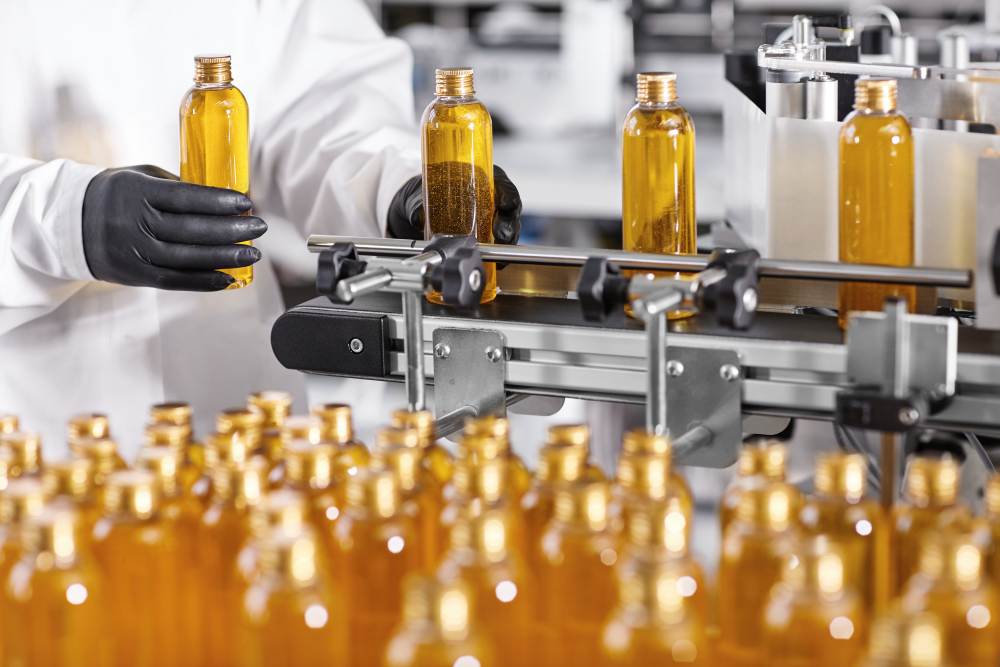
Can filling machines sit at the intersection of speed and precision – two requirements that are often in tension in industrial packaging, and that the best can filling equipment manages to serve simultaneously.
The Can as a Packaging Format
Metal and composite cans are used across a wide range of product categories: food and beverage, paints and coatings, adhesives, lubricants, automotive chemicals, and aerosol products. All use cans as a primary packaging format at some point in their supply chains. The can offers structural rigidity, tamper evidence, barrier protection against oxygen and light, and a uniform cylindrical form that stacks and palletises efficiently.
For the manufacturer filling cans at volume, the filling operation must handle the specific properties of each product: its viscosity, its corrosiveness toward certain metals, its temperature requirements during filling, and the headspace specification that determines the air gap between the product surface and the lid.
Can Filling Technologies
Different filling technologies suit different products and production requirements:
- Gravity filling: appropriate for thin, free-flowing liquids in open-top cans. Simple and low-maintenance, but less accurate and slower than active filling systems.
- Piston filling: a reciprocating piston mechanism delivers a precise volume of product per fill cycle. Well-suited to viscous products, including thick paints, adhesives, and food-grade creams.
- Weight-based filling: load cells beneath the can platform measure fill weight in real time and stop filling at the target weight. The most accurate approach is for products sold by weight or for high-value products where fill variation is costly.
- Pressure filling: used for carbonated beverages and pressurised aerosol products where the filling process must occur under controlled pressure to prevent foaming or product loss.
Can filling machines categorized as weight-based operation deliver the accuracy that regulatory compliance and commercial integrity require, particularly for products in the food and chemical categories?
Semi-Automatic vs Fully Automatic Configurations
The choice between semi-automatic and fully automatic filling systems is driven by production volume:
Semi-automatic systems require an operator to position the can, initiate the fill cycle, and remove the filled can. They are appropriate for small volumes where the capital investment in a fully automated system is not warranted. A well-designed semi-automatic machine with accurate weight-based filling can produce consistent fills at production rates of hundreds of cans per hour.
Fully automatic systems can integrate infeed, filling, lid placement, sealing or capping, and code application into a continuous process. They produce thousands of cans per hour with minimal operator involvement. The capital cost is significantly higher, but the labour cost per unit is dramatically lower at scale.
Speed as a Commercial Requirement
In high-volume can filling operations, speed is not simply a performance aspiration – it is a commercial necessity. A production line that fills 200 cans per hour, where the demand requires 600 per hour, creates a production bottleneck that affects delivery commitments, storage requirements, and business capacity.
High speed can filling equipment must maintain accuracy at throughput rates that domestic or low-volume equipment cannot sustain. The challenge is that increasing speed without reducing accuracy requires more sophisticated fill control systems, such as faster-acting valves, more responsive load cell electronics, and control software that anticipates the inertia of the product stream to stop the fill precisely at the right moment.
Product Compatibility and Changeover
Industrial can-filling machines typically handle a range of can sizes, from small tins to multi-litre jerry cans. Changeover between sizes should be achievable within a defined time window – typically 15 to 30 minutes for well-designed equipment – to maintain production flexibility without losing excessive time to reconfiguration.
Product changeover also requires consideration. Transitioning between chemically incompatible products requires a complete flush and cleaning of the filling system before the new products.
“Speed without accuracy produces waste. Accuracy without speed produces delay. Find both.” – Lee Kuan Yew
This principle is the engineering brief for every high-performance can-filling and packaging machine: fast enough to meet production requirements, accurate enough to meet quality and regulatory standards.
Maintenance and Reliability
Can filling machines in continuous production environments require scheduled maintenance of the pump mechanism, valve assembly, seals, and weighing system calibration? A machine that is calibrated regularly and maintained preventatively runs more reliably and fills more accurately than one that is serviced reactively.
Can filling machines for accurate, high-speed packaging, supported by a supplier who provides local technical service and genuine spare parts, deliver the production reliability that industrial manufacturers depend on.